Aquileia was founded in 181 BC as a Roman colony on the Natiso river, a few miles inland from the head of the Adriatic. It grew into one of the largest cities of the Roman Empire and a key military and trading port, and after Constantine's Edict of Milan it became one of the earliest and most important centres of Latin Christianity, hosting a Church council in 381 AD attended by bishops from across the Western Empire. The city's wealth and its position on the routes north into central Europe made it, for a time, one of the Empire's principal fortresses on its northern frontier.
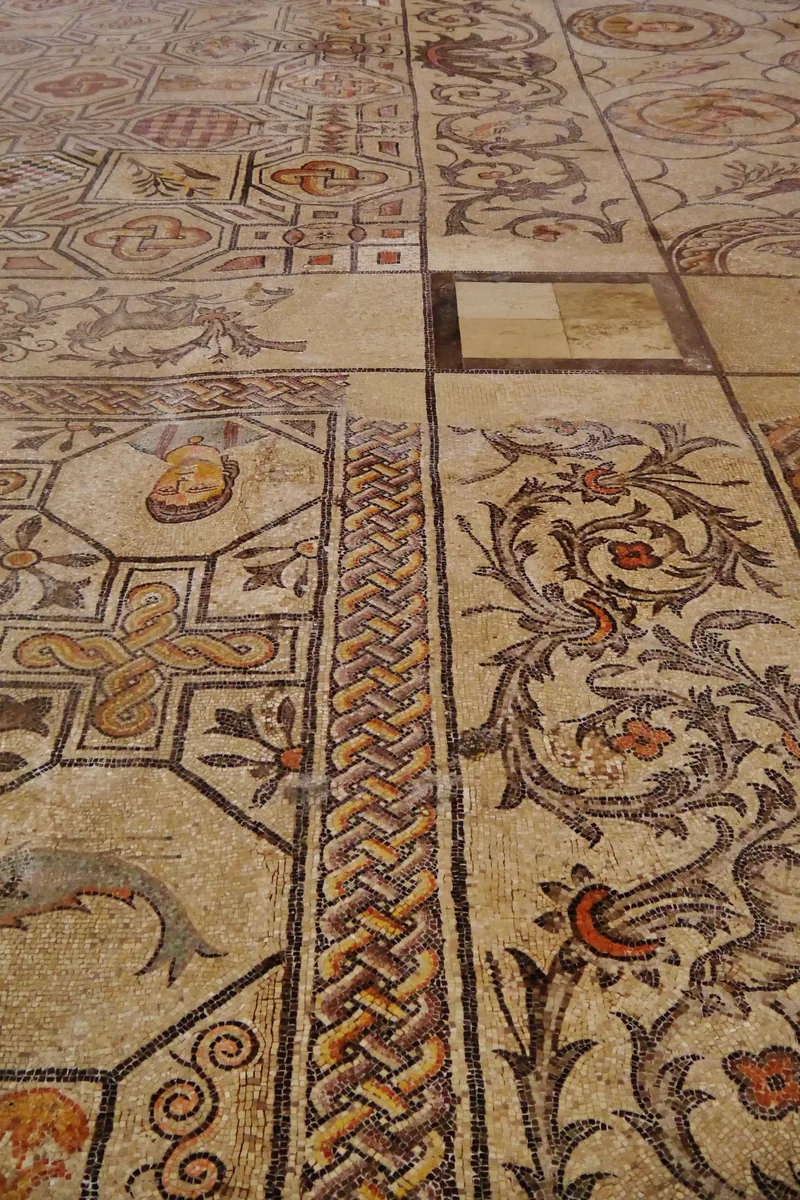
The Basilica standing today is largely an 11th-century Romanesque rebuild, consecrated in 1031, but its floor is far older: a mosaic pavement laid in the early 4th century for the first basilica built here after Constantine legalised Christianity, rediscovered beneath later flooring in the early 20th century and now covering the nave in its full extent. Beneath the church, the frescoed crypt and the excavation crypt reveal further layers of the site's history, while the complex extends to a Romanesque bell tower, a baptistery and south hall, an episcopal residence, and the separately excavated Domus di Tito Macro, one of the larger Roman town houses uncovered in northern Italy. In 1998, UNESCO inscribed the Archaeological Area and the Patriarchal Basilica of Aquileia as a World Heritage Site.
A single ticket, introduced in 2026, now covers the Basilica, the Complesso Basilicale (crypts, baptistery and Südhalle), the episcopal complex and the Domus di Tito Macro — four elements of one Roman-and-early-Christian city, seen in a single visit. We handle the booking of your dated entry so it's waiting on your phone when you arrive, with no queuing at the ticket office and no guesswork about which ticket covers what.